Healthcare Marketers Are Part of the Care Experience
Healthcare marketers help patients understand their options, build trust, and access care. The website carries that responsibility at scale, making it a core part of the care experience.
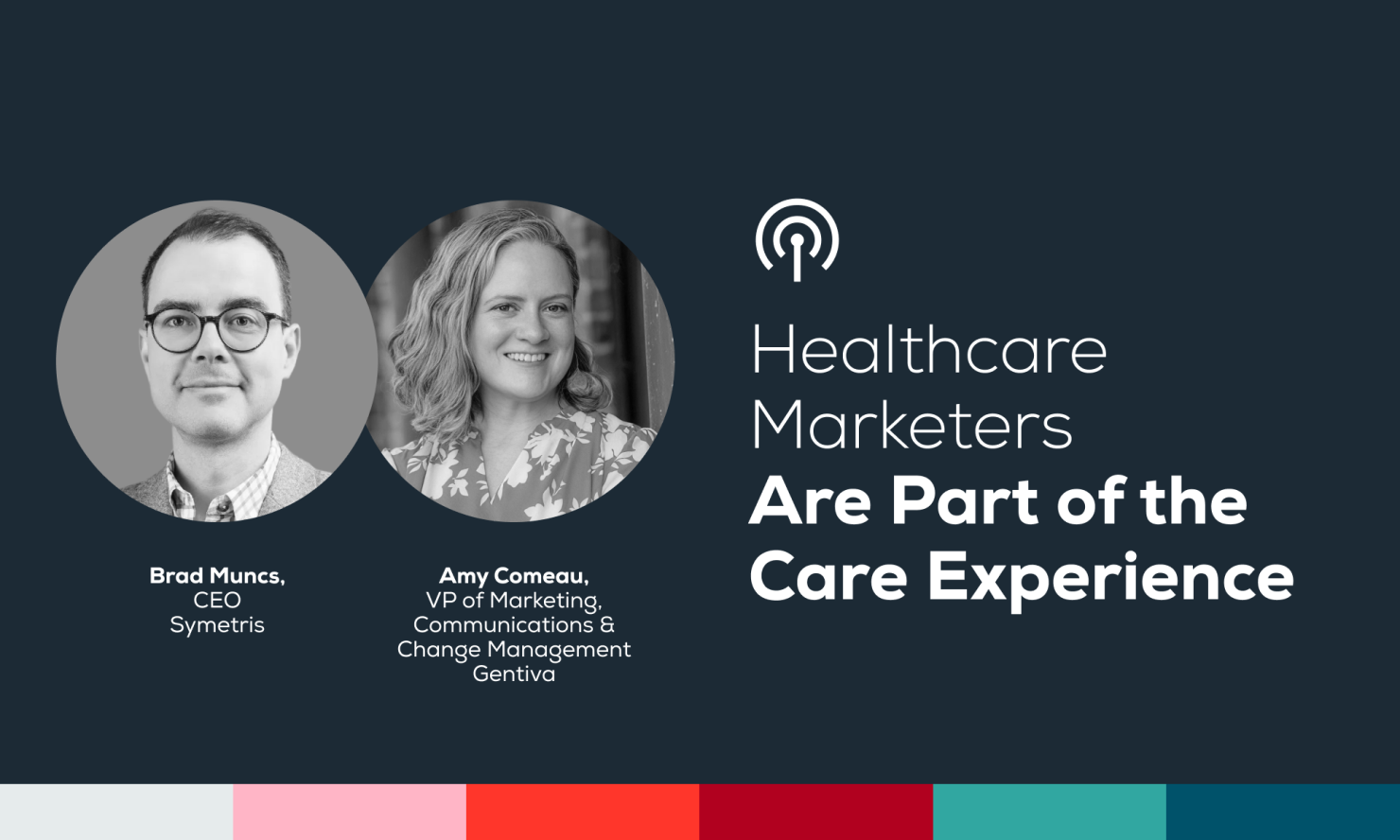
Watch on YouTube | Listen on Spotify
Trust begins before the first appointment, and the website is where that patient-facing responsibility becomes operational.
Amy Comeau spent 17 years at Emory Healthcare, where she served as Vice President of Marketing and functioned as the de facto Chief Marketing Officer for 10 years. She led marketing across a large academic health system with 11 hospitals, nearly 500 locations, and more than 29,000 employees. She now brings that experience to Gentiva as Vice President of Marketing, Communications & Change Management.
During COVID, that scale made an old question more urgent: who counts as patient-facing?
Financial pressure was forcing difficult staffing decisions. Roles classified as patient-facing could continue to be filled. Others were placed on hold.
Amy argued that healthcare marketers belonged in that first group. Her team wrote vaccine communications, managed CRM workflows, updated eligibility criteria, and helped patients register. Clinicians delivered the vaccines, but many patients would not have reached them without marketing.
Amy documented that period in weekly emails to her team. Those messages became Every Storm Runs Out of Rain, a book worth reading for leaders trying to keep teams focused while conditions keep changing. I recently spoke with her about the idea running through that experience.
The pandemic made marketing’s contribution to care unusually visible. The same responsibility remains today. Healthcare marketers influence whether patients understand their options, trust the organization, and take the next step. The website is where much of that responsibility becomes operational.
Healthcare marketers shape trust before the first appointment
Patients begin deciding whether to trust a health system before they ever enter an exam room.
A patient searches for help, reaches the health system’s website, and tries to determine whether the organization understands what they need and can help them move forward. That experience influences whether they continue toward an appointment or go somewhere else.
Amy made the connection tangible for her team.
She told them that hundreds of thousands of patients in Atlanta would not have been vaccinated without the emails, CRM systems, content, and data work they managed. In a later population health campaign, Emory used marketing automation to encourage patients to schedule breast cancer screenings. Amy connected the resulting appointments to cancers that could be found and treated earlier.
The clinicians delivered the care. Marketing helped patients reach it.
The website has to live up to the care behind it
The website is often the first place patients experience the health system for themselves.
Amy put the standard plainly:
“It should mirror the quality of care that is happening at your organization.”
A health system may deliver exceptional clinical care and still make patients work through outdated content, confusing navigation, broken forms, or a phone number that leads to a long hold. Internally, those problems may belong to different teams. Patients experience one organization.
The website shapes what they believe about the care behind it.
Amy made the business case at Emory by comparing website traffic with the number of patients being treated entering the health system’s physical facilities. Far more patients were interacting with Emory through its digital front door. The site also supported scheduling, medical-record access, directions, and other basic steps patients needed to move forward.
That scale leaves little room for selective attention. Patients do not arrive according to the marketing plan. They may be looking for a service line the organization is not promoting or a physician whose profile has not been updated recently.
The website has to serve the patients who arrive, not only the priorities receiving campaign dollars.
A patient-facing website is never finished
If the website is part of the care experience, maintaining it cannot depend on the next redesign.
“When you build a website, it’s like painting the Golden Gate Bridge. Once you finish, you gotta start all over again.”
- Amy Comeau
The metaphor fits. By the time one round of improvements is complete, the environment has already shifted. Physicians come and go. Services move. Scheduling evolves. Content grows stale. Integrations need attention. Patient expectations keep changing.
Health systems still tend to fund websites as periodic capital projects. A large investment gets approved, the new site launches, and the organization treats the work as complete until the platform becomes outdated or painful to operate.
A patient-facing website needs a different model. It requires clear ownership and a continuing budget for maintenance, content, measurement, platform health, and improvement.
Protecting that investment also requires marketing leaders to make the case beyond marketing.
When speaking with finance, IT, access, scheduling, or the C-suite, Amy’s advice was direct:
“You need to talk with them in their language, not marketing speak.”
Finance may care about lost demand and avoidable cost. IT may care about supportability and platform risk. Access leaders may care about scheduling friction and call volume. The website connects all of them, but the case for funding it has to reflect their priorities.
Calling the website patient-facing raises the standard. It also makes neglect harder to excuse.
Make the website a core part of patient care
Calling healthcare marketers patient-facing should change more than how teams describe their work.
It should change what health systems protect, fund, and hold accountable.
Marketing helps patients find care, understand their options, and decide whether to move forward. The website carries much of that responsibility at scale. When it works, it reduces uncertainty and earns trust. When it fails, patients feel the gap between the quality of care an organization promises and the experience it actually delivers.
Healthcare marketers do not provide the clinical care. But they shape whether patients can find it, trust it, and reach it.