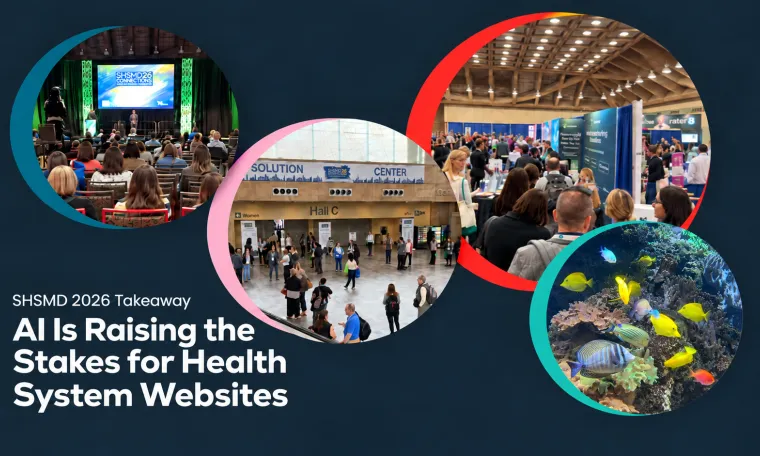
A healthcare website redesign does more than refresh the digital experience. It can expose the gap between what patients expect and how the organization actually works.
Trust, AI and access keep showing up in the same conversations for healthcare marketers. Mike Schneider and Kathy Divis share what they are seeing across HCIC 2026 proposals, and why deciding what deserves attention may be the harder challenge.
A redesign can replace the website without changing how the organization manages it. Product thinking gives health systems the ownership, governance, and resilience to keep improving between major rebuilds.
Healthcare marketers help patients understand their options, build trust, and access care. The website carries that responsibility at scale, making it a core part of the care experience.
Healthcare marketing leaders are not short on ideas. The harder part is protecting enough space, context, and perspective to make better strategic decisions before the work is already in motion.