What HMPS 2026 Revealed About AI and the Future of Healthcare Websites
AI is changing how healthcare marketing teams work and how patients choose care. Based on takeaways from HMPS 2026, this article explains why health system websites now need to do more than publish content. They need to help patients act, help AI systems understand the organization, and help marketing prove its value.

AI is changing the work behind the website and the way patients make decisions before they reach it.
Inside hospitals and health systems, AI has become a mandate for efficiency. Outside the organization, it is changing how patients search, compare, and choose care.
That tension showed up repeatedly at HMPS 2026 in Salt Lake City.
The most useful conversations were not just about AI tools. They were about what AI is forcing healthcare marketers to confront: weak content structure, messy provider data, unclear access paths, fragile measurement, and teams stretched thin.
The website sits in the middle of this.
Health system websites are becoming less of a browsing destination and more of a decision-support layer. They need to help patients take the next step, give AI systems something accurate to interpret, and give marketing a cleaner way to prove value.
Your website has to prove growth
When teams are smaller and budgets are tighter, healthcare marketers can’t afford to measure activity and hope leadership connects the dots. Traffic, clicks, impressions, and leads still matter, but they are not the finish line.
If marketing wants credibility with the C-suite, it has to show that its work changed an outcome, not just touched a journey.
This matters even more as teams look beyond new-patient acquisition toward activating existing patients.
Existing patients are already the economic center of gravity for most health systems, yet marketing often treats them like a secondary audience. They are easier to reach, already have a relationship with the organization, and often need help finding the next appropriate step in their care. The opportunity is not to send more emails to the patient base. It is to make it easier for existing patients to act.
The website has a larger role to play here.
For unauthenticated visitors, the website still has to make care findable, provider data trustworthy, and access paths clear. For existing patients, the future likely points toward a more connected experience: one where authenticated environments, portals, reminders, service-line content, scheduling, and next-best actions are consolidated.
Most health systems are not there yet. Many are still stitching together public websites, patient portals, CRM campaigns, call centers, provider directories, and scheduling tools. And patients feel the friction.
So the growth question becomes operational:
- Can the website help patients move from intent to action?
- Can it support existing-patient activation without creating another disconnected path?
- Can marketing prove that the experience created incremental revenue or margin?
Not more digital activity. More measurable movement.
AI is changing the work behind the website
The most useful AI conversations at HMPS were really about change management.
Healthcare marketing teams are already using AI in the day-to-day work behind the website. Sometimes officially. Sometimes through small experiments. Sometimes because one person on the team found a faster way to get through a task that used to take all afternoon.
When first drafts come faster and research gets compressed, old workflows start to feel slow. Review processes start to feel heavier. The gap between what a team can produce and what the organization can safely approve gets wider.
Healthcare teams do not need endless pilots that live off to the side. They need a way to decide which experiments deserve to become normal practice. That requires space to test, but also discipline about what gets adopted and what gets discarded. Otherwise AI becomes one more layer of inconsistency inside an already complicated digital operation.
The website is where those internal workflows become visible. Slow approvals become outdated content. Unclear ownership becomes inconsistent provider data. Weak governance becomes pages nobody trusts enough to update.
AI can help lean teams move faster, find patterns, and reduce manual work. But the health systems that get value from AI will not be the ones with the longest list of pilots. They will be the ones that turn useful experiments into repeatable workflows.
For healthcare marketers, the test is simple: does the AI use case improve the website experience, reduce manual work without lowering trust, and fit into a workflow the team can actually govern?
AI should not be a side experiment, but a part of the operating model behind the website.
AI raises the standard for healthcare websites
Coming out of the event, every healthcare marketer should ask whether their website, and the governance behind it, is ready for the AI reality we are already working in.
You need to review your website against the three jobs it now has to perform:
Help patients act
Can patients find the right care, understand the next step, and move forward without friction? Start with the service lines, provider profiles, location pages, and scheduling paths that matter most to growth.
Be visible to AI
Can search engines and AI tools understand what you offer, where you offer it, and why patients should trust it? Specific content, reliable provider data, structured markup, and consistent signals matter more now.
Stay maintainable without heroics
Can your team keep the website accurate, useful, and current without relying on workarounds or one overextended person? AI-assisted workflows still need clear ownership, review, and governance.
The marketers who adapt best will stop treating the website like a publishing backlog. They will treat it as the place where patients act, AI learns, and the organization proves its value.
-
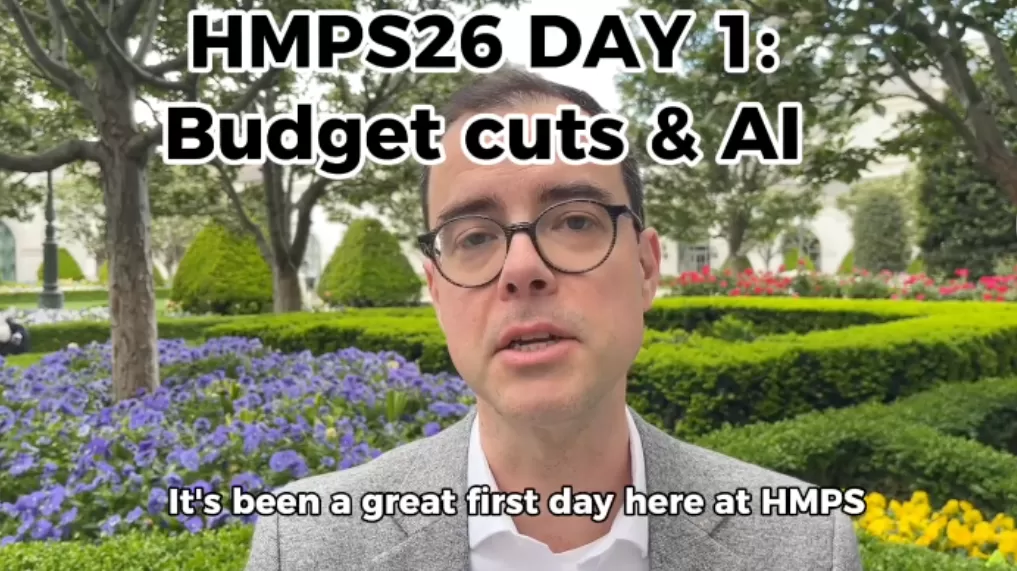
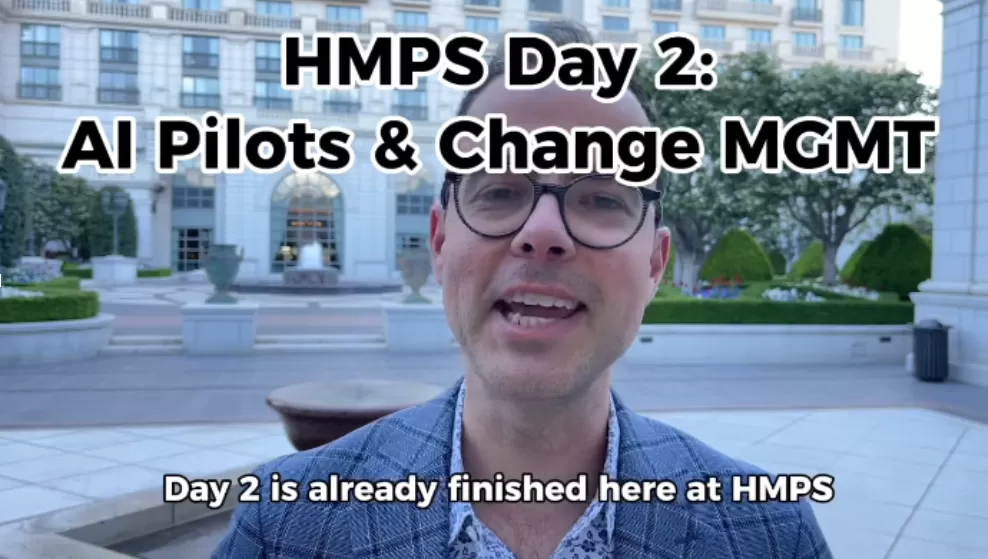
Looking for more takeaways in video format?
Check out Brad’s daily recaps LIVE from the event.